Views: 0 Author: Site Editor Publish Time: 2026-09-22 Origin: Site
Picture a standard scenario on the ice. A vulcanized rubber puck weighing roughly six ounces takes flight off a composite stick blade. It accelerates to speeds exceeding 90 miles per hour in a fraction of a second. At this velocity, the puck carries immense kinetic energy. When that specific energy vector is directed toward your face, standard protective measures are no longer optional. They become a critical structural barrier against severe dental, orbital, and neurological trauma.
Despite these obvious physical risks, a surprising number of adult players purchase their Protective Cage based purely on aesthetic appeal, brand familiarity, or immediate retail price. They completely ignore the actual metallurgical composition of the equipment. This oversight routinely leads to premature rusting, bent intersecting wires, and compromised safety on the ice. Understanding that different steel grades offer vastly different levels of yield strength, weight distribution, and environmental durability is essential for any serious player. As an equipment engineer evaluating impact resistance, I will break down exactly which metal alloy belongs in your helmet setup so you can make an informed and confident purchase.
Stainless Steel is the Industry Benchmark: 300-series stainless steel—specifically the SUS304 grade—represents the optimal choice for adult players. It delivers exceptional rust resistance and the high yield strength required to endure severe focal impacts.
Carbon Steel is Budget-Friendly but Vulnerable: While highly affordable and structurally sound upon initial purchase, A3 carbon steel relies entirely on exterior paint coatings. Once that coating chips, the underlying iron is highly susceptible to rapid oxidation from acidic sweat.
Vision is Dictated by Metallurgy: The inherent tensile strength of the steel grade directly influences wire manufacturing capabilities. Higher-grade alloys permit the extrusion of thinner, flatter wires that drastically reduce blind spots without sacrificing structural integrity.
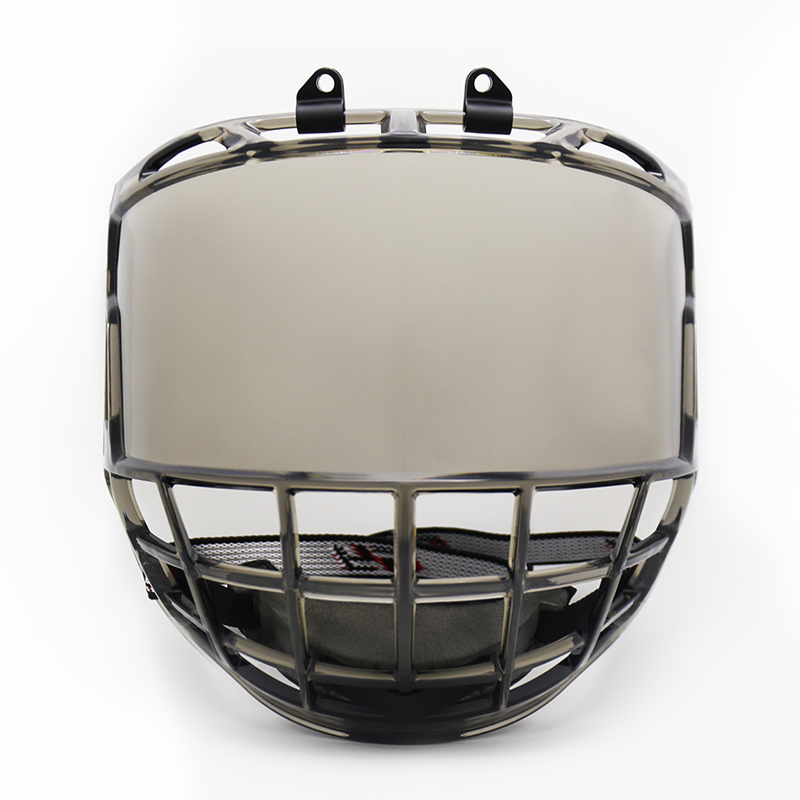
Comprehensive Defense: While half-shields offer clear peripheral sightlines, a premium metal grid provides comprehensive full-facial defense against rogue sticks, deflected pucks, and incidental physical collisions.
The fundamental objective of facial protection is to create an impenetrable geometric barrier that balances maximum kinetic energy absorption with optimal visibility and respiratory airflow. When a heavy slapshot strikes the wire matrix, the energy is not merely stopped. It is dispersed across the entire grid and transferred directly into the helmet's mounting clips. This grid must deform elastically, meaning it flexes slightly and snaps back to its original shape. If it deforms plastically, the result is permanent bending or catastrophic weld failure.
A protective grid is only as strong as its weakest intersection. Modern high-end equipment is constructed using precision resistance welding or Tungsten Inert Gas welding at every point where the vertical and horizontal wires cross. These microscopic joints take the absolute brunt of any localized impact. If the base metal possesses low tensile strength, the welds are highly prone to snapping under sudden stress. Consequently, the metallurgical properties of the base wire dictate the product's overall lifespan and safety margin.
The physical forces present in adult hockey leagues are exponentially higher than those found in youth hockey. A Full-face Cage engineered for youth players is designed to withstand lower mass and slower velocities. In stark contrast, adult equipment must endure heavier body weights during collisions, harder stick slashes, and significantly faster puck speeds. This drastic increase in applied force mandates that adult gear utilize higher-grade alloys to prevent structural collapse.
To make a prudent purchasing decision, buyers must understand the exact differences between the materials sitting on the retail shelf. From an engineering standpoint, not every Hockey Cage is forged equally.
Carbon steel is an alloy composed primarily of iron and carbon. In the context of sporting goods, A3 carbon steel is the most widely utilized material for entry-level and recreational gear.
From a manufacturing perspective, it is highly cost-effective to manipulate. Carbon steel boasts excellent ductility, meaning it absorbs blunt force impacts effectively without shattering. However, it is noticeably heavier than advanced alloys. More importantly, it has virtually zero natural resistance to oxidation. It relies entirely on a thick layer of powder-coated paint or epoxy to keep moisture away from the raw metal.
Stainless steel is defined by the addition of chromium—typically exceeding 10.5 percent—to the iron alloy. This specific chemical makeup creates a microscopic, self-healing passive layer of chromium oxide on the surface.
The 300-series, particularly SUS304 stainless steel, is the undisputed standard for mid-to-high-end protection. It is naturally resistant to rust and the corrosive chlorides found in human sweat. It offers a superior strength-to-weight ratio, allowing for a lighter final product. While the raw material costs are higher, the long-term durability makes it a highly cost-effective investment for players on the ice multiple times a week.
Top-tier equipment manufacturers often utilize specialized high-tensile stainless steel blends. Through advanced heat-treating processes, these alloys achieve massive tensile strength. This allows engineers to draw the metal into ultra-thin wire profiles. The result is a setup that weighs significantly less and obstructs far less vision while passing the exact same safety certifications as a thicker carbon steel counterpart.
Material Grade | Impact Resistance | Corrosion Resistance | Weight Profile | Best Application |
|---|---|---|---|---|
A3 Carbon Steel | High | Low — Relies entirely on paint coating | Heavy | Recreational / Occasional Play |
SUS304 Stainless Steel | Excellent | Exceptional — Self-healing oxide layer | Moderate to Light | Competitive / Frequent Players |
High-Impact Polycarbonate | Extreme | Impervious to rust | Ultra-Light | Players demanding peak optical clarity |
When evaluating how both metals handle a high-velocity impact, the initial safety margins are comparable. Both will effectively protect your face from severe trauma. However, the long-term structural integrity differs greatly. Carbon steel can suffer from micro-deformations over time after repeated heavy impacts. Stainless steel retains its original geometric shape more effectively over multiple seasons, ensuring the welded grid remains perfectly intact.
Hockey is an inherently high-exertion sport, and the resulting sweat is highly corrosive. Human sweat contains water, minerals, lactic acid, and chlorides, typically registering an acidic pH level. When the powder coating on a carbon steel wire inevitably chips from stick impacts or equipment bag friction, this acidic moisture attacks the exposed iron. This causes rapid oxidation. Stainless steel's chromium oxide layer prevents this chemical reaction entirely, keeping the metal structurally sound for years.
While the absolute weight difference between a carbon and stainless setup may only be a matter of ounces, this mass is situated at the furthest possible point from your spine. Over the course of a 60-minute game, heavier gear acts as a lever. This cantilever effect increases the workload on the cervical spine and neck muscles. Stainless steel’s superior strength allows manufacturers to use slightly less material, reducing this lever action and minimizing late-game neck fatigue.
Many adult players eventually transition away from heavy wire meshes entirely. A high-impact polycarbonate Hockey Visor offers completely unobstructed peripheral vision and eliminates the visual distraction of metal bars. Furthermore, modern Hockey Eyewear options incorporate double-sided anti-fog and anti-scratch coatings to maintain optical clarity in varying arena temperatures. However, this transition requires a calculated risk assessment, as visors leave the jaw and teeth entirely exposed to deflected pucks.
For players seeking a compromise between optical clarity and dental safety, hybrid shields offer a compelling engineering solution. These units feature a high-impact polycarbonate shield covering the eyes, seamlessly fused to a lower steel wire frame protecting the mouth and jaw. This setup provides the visual benefits of a visor while maintaining critical lower-face protection.
Recent market analyses indicate a distinct shift in consumer preferences regarding on-ice facial protection. Historically, budget-conscious amateur players defaulted to basic carbon steel due to its low barrier to entry. However, modern manufacturing efficiencies have significantly narrowed the price gap between entry-level and premium materials.
We are currently observing a major trend where recreational players prioritize long-term equipment longevity over initial savings. The industry is moving away from thick, heavy carbon extrusions. Current engineering trends focus heavily on integrating aerospace-grade material testing into everyday sporting goods. Manufacturers are prioritizing ultra-thin, flat-wire geometries using 304 stainless steel. Additionally, there is a massive surge in demand for hybrid setups that combine the uncompromising structural integrity of high-tensile steel with the visual clarity traditionally only found in polycarbonate visors.
The metallurgical quality of the steel directly dictates the physical dimensions of the product. Standard carbon steel requires a thicker wire gauge to meet mandatory safety impact thresholds, which inevitably creates larger blind spots in a player's field of view. High-tensile stainless steel allows engineers to utilize a much thinner wire gauge. Thinner wires occupy less surface area directly in front of the pupil, significantly improving a player's ability to track the puck at their feet.
Traditional designs utilize standard cylindrical wires. Unfortunately, round wires tend to catch and reflect overhead arena lighting from multiple angles, creating visual glare. Premium stainless steel options feature wires extruded into flat or oval shapes. Because the human eye is naturally adept at focusing past thin, flat obstructions, these wires essentially disappear from the player's conscious line of sight. This offers a massive upgrade in visual tracking.
The color of the steel coating serves a distinct optical purpose. Many premium models feature a dual-tone paint scheme. The interior facing the player is often painted matte white or silver to reduce contrast against the white ice surface. This allows the bars to blend into the background. The exterior is typically painted matte black to absorb ambient light and reduce glare from overhead arena bulbs.
No matter how aesthetically pleasing a design may be, it is useless if it cannot pass rigorous safety standards. In North America and Europe, facial protection is heavily regulated. The Hockey Equipment Certification Council in the USA, the Canadian Standards Association in Canada, and Conformité Européenne in Europe set the baseline testing protocols.
To achieve certification, the equipment must endure extreme laboratory testing. Evaluators fire a puck via a pneumatic cannon at speeds exceeding 70 mph from various angles. Technicians also conduct stick blade penetration tests to ensure the gaps between the wires are small enough to prevent the toe of a stick from reaching the orbital bone.
The product will only pass these violent tests if the steel possesses sufficient yield strength. If a manufacturer attempts to use low-grade A3 carbon steel but makes the wires too thin to save weight, the metal will dent inward upon impact. It will touch the testing headform and fail the certification. Seeing a HECC or CSA sticker is objective proof that the steel grade and welding quality meet strict metallurgical standards for human safety.
Proactive maintenance is required to ensure longevity regardless of your metal choice. The most critical step occurs immediately after leaving the ice. Players should use a highly absorbent microfiber towel to wipe down the metal, paying special attention to the welded joints where water tends to pool. Equipment should never be left zipped inside a damp, unventilated hockey bag. Helmets must be aired out in a dry, room-temperature environment to halt the oxidation process.
Routine inspection is a mandatory safety habit. Once a month, closely examine your gear under good lighting. Run your fingers over the wire intersections to check for cracked or separated welds. Look for areas where the powder coating has chipped away. If you are using a carbon steel model, any exposed metal should be treated with a clear, rust-inhibiting sealant immediately to prevent rapid deterioration.
Metal fatigue is a reality of the sport. The structural grid is designed to sacrifice itself to save your face. If it takes a direct, violent impact from a slapshot and any wire is noticeably bent inward, the structural integrity of the entire unit has been compromised. It has done its job and must be retired. Attempting to manually bend the wire back into place severely weakens the metal, drastically increasing the chances of a catastrophic failure during the next impact.
Choosing the correct steel grade ultimately comes down to matching the equipment parameters to your specific environment.
For Recreational Play: If you play once a week in a low-intensity league where slapshots are rare, a standard A3 carbon steel setup is generally sufficient. Diligent post-game drying will keep it functional on a budget.
For Competitive Play: If you are on the ice multiple times a week facing high-velocity shots and heavy traffic in front of the net, upgrading to a SUS304 stainless steel option is an engineering necessity. The superior vision from thinner wires and the lack of rust development make it a vital investment.
For Maximum Vision: If peripheral tracking is your primary concern and you accept the dental risks, transition to a high-impact polycarbonate half-shield with double-sided anti-fog treatments.
Premium steel is only effective if it fits correctly. While most modern designs are universally compatible, discrepancies in sizing can occur. Ensure that the top hinges align perfectly with your helmet. Verify that the J-clips on the side lock securely to prevent the metal from smashing into your chin upon impact. The chin cup must rest comfortably and snugly against your jawline.
Your face is your most valuable asset on the ice. The metallurgical grade of your facial protection dictates its overall weight, rust resistance, and visibility during high-speed gameplay. Whether you opt for standard carbon steel, upgrade to high-tensile stainless, or eventually transition to polycarbonate visors, you must prioritize objective safety certifications above all aesthetic choices. For the vast majority of adult players, investing in a high-quality SUS304 stainless steel setup is the most logical, cost-effective decision you can make for your long-term safety. Take the time to evaluate your league intensity, respect the engineering behind the materials, and equip yourself appropriately. For industry-leading facial protection engineered with premium 304 stainless steel and high-impact polycarbonate, visit GY Optical to find the exact setup that matches your performance needs.
While highly rust-resistant, no metal is entirely rust-proof under extreme abuse. However, stainless steel utilizes a chromium oxide layer that will last significantly longer against corrosive sweat and locker room humidity than carbon steel. Proper post-game drying extends its life indefinitely.
Most modern cages are designed to be universally compatible with major helmet brands. However, it is always best to check the manufacturer's specific sizing chart to ensure proper J-clip alignment and verify the chin cup fits securely against your jawline.
Titanium is the lightest metal option, offering a strength-to-weight ratio that eclipses stainless steel by nearly 50 percent. Alternatively, high-impact polycarbonate visors are incredibly lightweight but do not offer lower-face protection. High-tensile stainless steel provides the best middle ground for weight, safety, and cost.
Yes, absolutely. Extruded flat or oval wires reduce the surface area that directly blocks your pupil. Furthermore, flat wires minimize the reflection of overhead arena lights, drastically reducing glare and allowing your eyes to naturally focus past the metal grid.
A polycarbonate half-shield provides completely unobstructed peripheral vision and zero wire distraction. However, a premium cage with flat stainless steel wires offers excellent visual tracking while providing far superior dental, jaw, and facial protection against errant sticks.
You should replace your facial protection immediately if you notice any bent wires, broken welds, or severe rust that compromises the joints. If it remains structurally sound and free of deep corrosion, a high-quality stainless steel model can safely last for several consecutive seasons.