Views: 0 Author: Site Editor Publish Time: 2026-09-20 Origin: Site
Picture the blue line. You lock eyes with the opposing defenseman winding up for a slapshot. Milliseconds later, a six-ounce vulcanized rubber puck hurtles toward your face at velocities exceeding 100 miles per hour. Errant composite sticks slash through the air, often catching players entirely off guard in the heat of a board battle. The rink is a highly volatile environment defined by intense speed and inherent unpredictability.
In this high-velocity setting, the risk of severe facial, dental, and ocular trauma is an absolute reality. Prioritizing proper Hockey Safety equipment is not merely a recommendation. It is a strict necessity. Protecting the most vulnerable areas of the head requires gear engineered to absorb massive kinetic energy and rigorously evaluated by independent laboratories.
The face shield stands as a critical component of modern protective equipment. Empirical evidence shows that off-the-shelf plastics fail catastrophically under game conditions. Purchasing reliable gear requires a fundamental understanding of the strict impact standards governing their construction. These standardized metrics are the only guarantee of a player's safety against high-kinetic-energy impacts.
This technical guide breaks down the exact safety certifications required for professional and amateur play. We examine the objective testing methodologies used by engineering laboratories, compare the structural coverage of different mask types, and provide the actionable specifications necessary to make an informed, safety-first purchasing decision.
Major Regulatory Standards: The primary impact certifications for facial protection are administered by HECC in the United States, CSA in Canada, and CE for European and international play.
Empirical Kinetic Testing: Certified gear must survive extreme impact testing, including high-velocity frozen puck strikes fired from pneumatic cannons and standardized stick-blade penetration tests.
Material Engineering: High-quality shields are extruded from aerospace-grade, shatter-resistant polycarbonate. Premium models feature dual-sided chemical treatments, including hydrophilic anti-fog and hardened anti-scratch coatings.
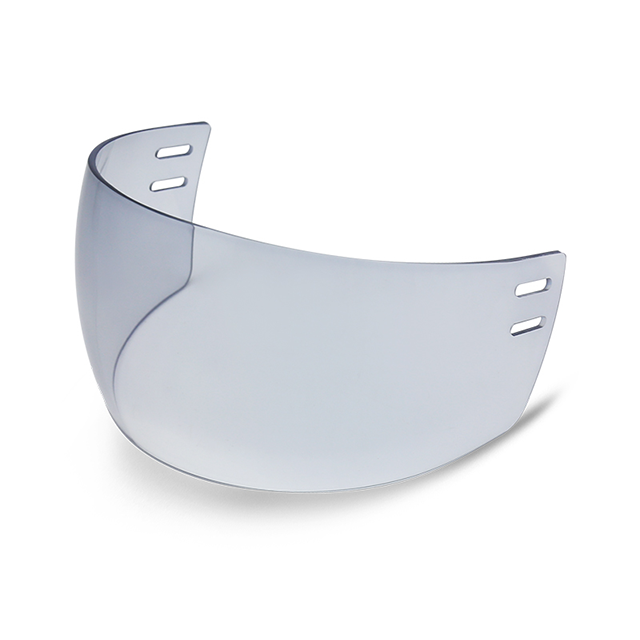
Structural Dynamics: A half shield offers superior optical clarity and peripheral visibility. Conversely, full facial protection provides maximum impact mitigation and is legally mandated for junior and minor league players.
Polymer Degradation: Safety certifications are not permanent. Polycarbonate materials degrade over time due to UV exposure and extreme temperature fluctuations, requiring players to routinely verify the certification stickers on their gear.
The history of facial protection in ice hockey represents a timeline of reactive safety measures. Early players took to the ice completely exposed to freezing air and flying rubber. This lack of protection resulted in a statistical nightmare of facial lacerations, orbital bone fractures, and severe dental trauma. Athletic governing bodies eventually recognized the unsustainable nature of these injuries and mandated the use of facial barriers.
The transition to the mandatory integration of certified Hockey Eyewear marks a massive leap in sports biomechanics. Today, the design of these protective barriers is governed by strict engineering principles rather than simple aesthetics. Following the widespread adoption of standardized shields in professional leagues, the incidence of catastrophic eye injuries dropped precipitously. Clinical sports medicine data indicates that players wearing certified half shields significantly reduce their risk of globe ruptures, while full facial protection virtually eliminates lower-jaw trauma.
Impact standards establish an uncompromising baseline of structural integrity. Without these benchmarks, the market would flood with inferior acrylics. Under the extreme force of a freezing puck, non-certified plastics shatter instantly. The resulting sharp plastic shards often cause secondary ocular injuries worse than the initial blunt force trauma. Certification ensures the polymer flexes, absorbs, and disperses kinetic energy without catastrophic structural failure.
Evaluating the safety of your equipment requires looking for the seal of approval from recognized standardization bodies. These organizations establish the exact testing protocols that independent engineering laboratories use to stress-test the equipment.
The Hockey Equipment Certification Council serves as the ultimate authority on equipment safety in the United States. Founded at the request of USA Hockey, HECC evaluates products based on meticulous standards developed by ASTM International.
For facial protection, HECC utilizes the ASTM F513 standard specification. This protocol dictates the exact dimensions the shield must cover, the minimum kinetic impact resistance, and the baseline optical clarity. A HECC certification sticker is mandatory for all players participating in USA Hockey-sanctioned events. HECC certifications are strictly time-limited. They generally expire six and a half years from the date of manufacture to account for the natural chemical degradation of plastic polymers.
Across the border, the Canadian Standards Association takes the helm. The specific protocol for ice hockey face protectors is CSA Z262.2. Hockey Canada strictly enforces the requirement that all sanctioned players wear CSA-certified equipment.
The CSA standard focuses heavily on polymer performance under extreme temperature fluctuations. Ice hockey occurs in freezing environments where plastics naturally become brittle. The standard also evaluates the structural integrity of the mounting hardware. A visor is useless if the steel screws and J-clips sheer off during a heavy collision along the boards. CSA Z262.2 ensures the hardware remains firmly anchored to the helmet shell.
European leagues and international play governed by the IIHF require equipment to meet the CE mark requirements. The specific benchmark is the EN ISO 10256 standard for head and face protection in ice hockey.
The CE standard ensures compliance with the strict Personal Protective Equipment directives of the European Union. ISO 10256 provides a globally recognized framework testing for impact attenuation, penetration resistance, and the chemical safety of materials touching the skin. Premium manufacturers engineer their gear to pass HECC, CSA, and CE protocols simultaneously.
Claiming a piece of plastic is shatterproof requires brutal, uncompromising laboratory testing. Certification bodies subject these products to extreme conditions mimicking the absolute worst-case scenarios on the ice.
Testing begins in a sub-zero chamber where the ambient temperature mirrors a frigid outdoor rink. The physical properties of polycarbonate change based on temperature. Shields are conditioned in freezing chambers at minus twenty-five degrees Celsius before any mechanical stress is applied.
The conditioned shield is mounted on a standardized bio-fidelic headform. Engineers utilize a pneumatic air cannon to fire frozen vulcanized rubber pucks directly at the surface at varying angles and velocities exceeding 90 mph. The plastic must not crack, shatter, or deform deeply enough to contact the headform's eyes or nose. A shield fails certification immediately if it survives the impact but touches the underlying facial structure.
Errant stick blades cause a massive percentage of facial trauma. Laboratories deploy standardized mechanical arms equipped with actual carbon fiber stick blades. These arms strike the shield from below to simulate a severe high-sticking penalty.
Penetration tests guarantee that a stick blade cannot pass through ventilation gaps or slide under the rim of the shield. The geometric design must redirect the kinetic energy away from the orbital and cheekbones.
A shield that stops a puck but causes spatial dizziness is a severe safety hazard. Impact standards mandate strict optical clarity tests to prevent compromised depth perception.
Laboratories use advanced lasers and optical sensors to measure light refraction through the curved polycarbonate. If the curvature distorts vision, a player will misjudge the distance of an incoming opponent. Certified models guarantee zero optical distortion across the primary field of view to prevent neurological eye fatigue during long shifts.
Players must weigh visual clarity against total physical coverage. Understanding the structural differences is critical for maximizing safety based on specific league regulations.
Gear Type | Impact Coverage | Optical Clarity | Breathability | Ideal For |
|---|---|---|---|---|
Half Shield | Eyes and upper nose only | Maximum, unobstructed | Excellent airflow | Pro and senior adult leagues |
Wire Cage | Full face, jaw, and teeth | Slight metal bar obstruction | Maximum, zero fog risk | Youth, junior, and safety-conscious adults |
Hybrid Setup | Full face, jaw, and teeth | Clear upper, caged lower | Moderate, requires anti-fog care | Players wanting clear vision with full dental protection |
The half shield covers the upper half of the face to protect the eyes and the bridge of the nose. It remains the standard choice for professional and senior-level adult players.
The primary advantage is an unmatched field of vision. The open lower face maximizes airflow, making breathing and communication effortless. However, it leaves the jaw and teeth entirely exposed to pucks and sticks. Players in permitted leagues must utilize a certified, high-impact model to ensure ocular safety is never compromised.
Constructed from high-tensile steel or titanium, the traditional wire mask covers the entire face from the forehead down to the chin cup. This design offers the absolute highest level of physical blunt-force protection.
The open wire mesh eliminates any risk of fogging during intense shifts. While the metal bars slightly obstruct peripheral vision, the trade-off for complete dental safety is exceptional. Adult players seeking maximum safety frequently upgrade to a certified Hockey Cage. Youth players rely on these structures as a legally mandated defense against catastrophic injuries.
The hybrid setup fuses a high-impact polycarbonate upper shield with a lower wire or plastic breathable cage. This unit covers the mouth and jaw while keeping the line of sight free from metal bars.
This design delivers comprehensive coverage. The player's vision remains unobstructed while their teeth remain fully protected. Investing in a highly engineered Hockey Helmet Cage ensures you meet all impact and penetration tests without sacrificing spatial awareness.
Passing HECC and CSA standards relies entirely on chemical composition. Standard acrylics or cheap injection-molded plastics fail immediately under the stress of a competitive game.
Certified facial protection utilizes aerospace-grade polycarbonate. This thermoplastic polymer boasts exceptional impact resistance and high dimensional stability. Unlike glass that fractures upon impact, polycarbonate features a molecular structure designed to flex.
When a heavy puck strikes the surface, the polycarbonate momentarily deforms. It absorbs the kinetic shockwave, disperses the force across the entire surface area, and instantly snaps back to its original shape. This unique physical property makes it the only acceptable material for standard-approved gear.
The extreme temperature differential between a player's hot breath and the freezing ambient air creates immediate condensation. A fogged shield renders a player effectively blind.
Premium manufacturers apply hydrophilic chemical coatings during the extrusion process. These treatments prevent water vapor from forming large droplets. Instead, the coating forces moisture to spread into a transparent microscopic film. This keeps vision crystal clear during the most grueling shifts.
Robust anti-scratch coatings protect the exterior surface. Scratches catch rink lighting and create micro-distortions in the player's vision. Deep scratches also compromise the structural integrity of the polycarbonate, creating weak points susceptible to cracking under secondary impacts. Maintaining optical clarity over time is a strict requirement for long-term HECC and CSA compliance.
As the speed of the game accelerates, the protective equipment industry is rapidly evolving. Recent sports engineering trends reveal a significant shift towards advanced nanomaterials. Manufacturers are moving away from traditional heavy steel alloys, opting for ultra-lightweight titanium and advanced polymer composites that reduce neck fatigue without sacrificing tensile strength.
A major breakthrough in the market is the integration of light-adapting technologies. Consumer demand is surging for the photochromic Hockey Visor, which automatically adjusts its tint based on the harshness of the rink's overhead LED lighting. These dynamic shields transition from clear to dark in seconds, reducing glare and eye strain.
Furthermore, with stricter concussion protocols in place, biomechanical researchers are actively analyzing how facial gear interacts with the helmet shell to absorb rotational forces rather than just direct blunt trauma. Regulatory bodies like HECC and CSA are currently scrutinizing these innovations to ensure they meet the strict baseline optical clarity metrics required for safe, high-speed play.
Purchasing certified equipment requires aligning your choice with the specific legal requirements of your respective league.
The NHL strictly mandates that all new players entering the league wear a certified half shield. Adult recreational leagues often feature relaxed rules, allowing players to choose between full cages, half shields, or no protection. However, rink insurance policies heavily rely on HECC and CSA standards. Playing in uncertified gear often voids insurance coverage, leaving the player liable for their own medical bills.
USA Hockey and Hockey Canada legally require all minor players to wear full facial protection. Youth players cannot wear a half shield under any circumstances. They must utilize a fully certified wire mask or a full hybrid shield. This strict mandate has successfully eradicated almost all dental and ocular injuries in youth hockey.
Hardware alignment is critical. Position a half shield to cover the eyes and extend down to the lower tip of the nose. Ensure the J-clips and spacers sit flush against the helmet shell to prevent the plastic edge from driving into the bridge of the nose upon impact.
Maintain the chemical coatings with care. Use a clean microfiber cloth to gently wipe away sweat. Never use paper towels, as abrasive wood fibers cause micro-scratches. Avoid household glass cleaners containing ammonia, as these chemicals strip the factory anti-fog coating and accelerate polycarbonate degradation. Replace the shield immediately if it sustains a heavy direct impact or develops deep stress fractures.
Proper facial protection serves as a critical investment in your long-term health on the ice. The sheer velocity of the modern game means that relying on uncertified plastics is a massive, unnecessary risk. Impact standards established by HECC, CSA, and CE exist for a singular engineering purpose: to ensure that when a high-speed puck strikes your face, the kinetic energy is absorbed, allowing you to skate away without a catastrophic injury.
Always assess your equipment before the season begins. Inspect the polycarbonate for stress fractures, verify the expiration stickers, and upgrade to high-quality, certified protection. By prioritizing gear that survives rigorous laboratory testing, you ensure peak performance, clear vision, and uncompromising safety. For standard-compliant, optically precise facial protection engineered for the modern game, explore the full range of certified visors and cages at GY Optical.
HECC certifications for hockey helmets and facial protection are valid for 6.5 years from the date of manufacture. CSA certifications do not print a strict expiration date, but safety engineers highly recommend replacing the gear if it sustains a heavy impact, develops deep scratches, or exceeds 5 to 7 years of use due to natural polymer degradation.
HECC is the governing standard for USA Hockey, utilizing ASTM testing protocols to measure impact resistance and optical clarity. CSA is the Canadian standard required by Hockey Canada, which places a slightly heavier emphasis on testing the plastic's structural integrity and mounting hardware in extreme sub-zero temperature fluctuations. Premium visors are engineered to pass both simultaneously.
Preventing fog requires protecting the factory-applied hydrophilic coating. Never wipe the inside of your visor with a rough towel or jersey, and avoid ammonia-based glass cleaners. Clean the visor only with a soft microfiber cloth and a specialized hockey visor spray. If the factory coating wears off over time, apply a high-quality anti-fog spray before each game to maintain a clear moisture barrier.
Certified shields are extruded from aerospace-grade polycarbonate designed to flex and absorb kinetic energy. While virtually shatterproof under normal conditions, extreme repetitive impacts can cause them to micro-fracture. If cracking occurs, the shield has successfully done its job by absorbing the lethal blow, but it must be replaced immediately.
A traditional wire mask is constructed entirely of steel or titanium mesh, offering maximum breathability without the risk of fogging. A hybrid setup combines a clear polycarbonate upper shield for unobstructed vision with a lower breathable cage for jaw protection. Both offer full-face coverage, but the hybrid requires routine maintenance to protect the anti-fog coating on the upper shield.
Tinted shields can receive HECC and CSA certification provided they meet all impact and optical distortion standards. However, many amateur leagues strictly prohibit tinted shields. Medical staff and referees must be able to see a player's eyes clearly through the visor to assess for suspected concussions or severe neurological injuries.
Authentic equipment features official HECC and CSA stickers firmly affixed to the product. For shields, these sit on the upper corners or directly on the mounting clips. For wire masks, the stickers wrap around the upper metal bars. Never remove these stickers, as league officials use them to verify compliance prior to puck drop.