Views: 0 Author: Site Editor Publish Time: 2026-08-07 Origin: Site
Upgrading to a half-shield fundamentally changes your peripheral vision and puck-tracking ability. Choosing the wrong tint or cut can actively hinder your game on the ice. Players often select an Ice Hockey Visor based purely on NHL aesthetics. They forget to assess their local rink's specific lighting conditions. Many also ignore their league's equipment rules and the optical realities of polycarbonate shields. This guide provides an objective, purely functional breakdown of clear, tinted, and custom visors. You will learn how to evaluate which option aligns perfectly with your playing environment. We also cover compliance requirements and performance budgets to ensure you make a smart, informed decision before your next puck drop.
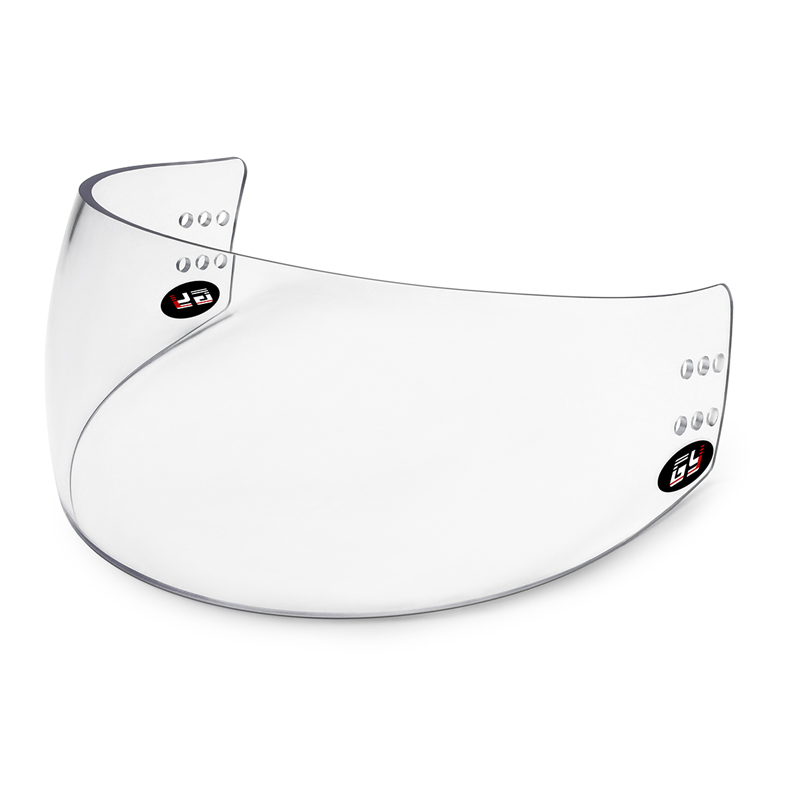
Clear visors remain the undisputed baseline for maximum light transmission, making them the only viable choice for poorly lit recreational rinks.
Tinted visors offer legitimate functional benefits for players with light sensitivity or post-concussion symptoms, but carry social stigmas in adult leagues and are often strictly regulated by governing bodies.
Custom visors (unique cuts, mirrored finishes) allow for personalized breathability and aesthetic profiles but require higher replacement budgets due to proprietary anti-fog and anti-scratch coatings.
HECC/CSA Certification is the ultimate tie-breaker; non-certified aftermarket tints or cuts will void insurance and result in benching in sanctioned leagues.
Understanding the underlying materials and treatments of your face protection is crucial. Polycarbonate serves as the industry standard for modern facial impact protection. However, not all polycarbonate processing methods yield the same optical results.
Manufacturers produce cheap shields using an extrusion method. This process pulls hot plastic into flat sheets before bending them into shape. Bending the material stretches the polymer unevenly. This stretching creates microscopic optical distortions across the lens. When you look through an extruded lens, objects shift slightly from their actual position. You might misjudge a hard pass or whiff on a fast one-timer. High-quality injected polycarbonate solves this problem entirely. Manufacturers inject liquid polymer directly into a precise, curved mold. This injection method maintains complete optical trueness. The puck appears exactly where it actually sits on the ice.
The following chart illustrates the functional differences between manufacturing processes.
Feature | Extruded Plastic | Injected Polycarbonate |
|---|---|---|
Optical Clarity | Prone to bending light and edge distortion. | Maintains true optics and puck positioning. |
Manufacturing Method | Stretched and bent into shape. | Molded precisely into its final curve. |
Impact Resistance | Moderate; can weaken at stress points. | Maximum; uniform density withstands heavy impacts. |
You must also set realistic expectations regarding anti-fog and anti-scratch treatments. Warm breath inevitably hits a cold plastic shield. Condensation forms instantly upon contact. Factory-baked anti-fog coatings resist this moisture buildup significantly better than aftermarket spray applications. However, no shield remains permanently fog-proof forever. Proper maintenance acts as a non-negotiable hidden cost. Wiping your shield repeatedly using a sweaty, dirty jersey ruins the delicate factory coating. You must strictly use clean micro-fiber cloths and mild solutions.
Profile depth directly affects both protection and breathability. Deeper cuts provide greater facial coverage. They protect more of your cheekbones and upper jaw. Unfortunately, deep profiles also trap significantly more body heat. This restricted airflow increases fogging risks during intense, high-exertion shifts. Shallower profiles breathe better but leave you slightly more exposed to errant sticks.
Clear models dominate the market for very good reasons. They offer a functional baseline no other style can match. The most critical metric for facial protection is Visible Light Transmission (VLT). Clear lenses offer nearly one hundred percent VLT. You need every available photon of light in poorly lit community rinks.
Late-night recreational hockey games often feature dim, inconsistent, or yellowed lighting setups. Tracking a fast-moving black puck in these conditions is incredibly difficult. A clear lens ensures maximum contrast against the white ice and dark boards. It gives your eyes the best possible chance to track the play accurately. You avoid placing unnecessary optical handicaps on yourself during fast transitions.
Clear models also offer unmatched market availability and scalability. Every major equipment brand produces clear, standardized models. You can easily find replacements at almost any local rink pro shop. They fit seamlessly onto standard Bauer, CCM, and Warrior helmets. You rarely need proprietary spacer kits or specialized mounting hardware to attach them. Furthermore, clear options scale perfectly for team orders. They offer a significantly lower replacement cost when inevitable scratches occur.
The final verdict is simple. A clear shield represents the most logical choice for ninety-five percent of players. This holds especially true in adult recreational hockey where rink lighting often remains suboptimal.
Dark lenses serve highly specific functional and medical purposes. Some players suffer from photophobia or general light sensitivity. Players recovering from concussions often experience severe pain under bright lights. In these medical scenarios, a tint provides essential, legitimate relief. It reduces strain on the optic nerve and allows players to return to the ice safely.
Professional and collegiate arenas utilize incredibly bright LED lighting systems. The pristine, freshly resurfaced ice reflects this heavy light aggressively. Professional players use twenty or thirty percent tints to cut this harsh broadcast-quality glare.
However, you face a severe visibility trade-off in standard environments. Using a dark lens in a dimly lit community rink is actively dangerous. Reduced contrast makes picking up the black puck against dark corners significantly harder. It slows your reaction time. You put yourself at a massive competitive disadvantage just to achieve a specific look.
You must also consider the cultural context of recreational hockey. Reddit and ModSquadHockey communities frequently discuss the established locker-room stigma. Opponents and teammates often view tinted shields in low-level recreational hockey as purely performative. Many players associate them with "beer league heroes" who prioritize style over teamwork. You will inevitably face chirping and judgment if you wear one without a visible medical reason.
The verdict remains strict. We recommend dark lenses exclusively for players dealing with specific optical sensitivities. They also suit players competing exclusively in brightly illuminated, broadcast-quality professional arenas.
Advanced players often explore boutique shapes and specialty finishes to customize their Ice Hockey Visor. Understanding how different cuts alter your physical profile is vital.
Aviator (Pro-cut): This shape tapers sharply around the cheekbones. It looks sleek and maximizes downward airflow toward the mouth. It clears hot breath away quickly.
Straight cut: This classic shape offers a flat, uniform bottom edge. It provides consistent lower-face depth and slightly better protection against high sticks.
European cut: This wider sweep accommodates broader helmet styles. It offers excellent peripheral coverage but can look bulky on narrow faces.
The specific cut dictates the physical gap between the plastic and your nose. A larger gap improves breathability drastically. A tighter gap limits stick-blade vulnerability but traps moisture against the lens.
Gradient and mirrored tints offer different functional realities. Gradients feature dark tinting at the top edge. This fades into completely clear plastic at the bottom. This clever design blocks overhead arena lights while keeping your downward view of the ice perfectly clear. It offers a highly functional compromise. Mirrored finishes, conversely, serve primarily aesthetic purposes. They reflect light outward and look incredibly intimidating. However, they are highly prone to visible scratching. A single scuff ruins the mirrored aesthetic permanently.
You must also acknowledge the implementation risks associated with custom shapes. Boutique profiles often require specific spacer kits. A unique cut might not align correctly with standard J-clips. Mixing a boutique brand with older helmet models frequently causes serious compatibility issues. The shield might sit too high on your forehead or tilt awkwardly against your nose.
Safety certification dictates what equipment you can legally wear in sanctioned games. The Hockey Equipment Certification Council (HECC) governs standards in the USA. The Canadian Standards Association (CSA) handles testing in Canada. These bodies rigorously test shields for severe impact resistance and shatter proofing.
Any physical modification to a certified shield immediately voids its certification. Applying aftermarket automotive window tint films is strictly prohibited. These cheap films peel easily in cold, wet rink environments. They warp and distort your vision. More importantly, they compromise the structural integrity of the certification. An uncertified piece of equipment immediately voids your league insurance policy.
Rules differ significantly between minor hockey and adult leagues. USA Hockey and Hockey Canada universally ban tinted and mirrored options in youth minor hockey. Youth players must wear fully clear, certified facial protection. There are absolutely no exceptions for aesthetic preferences in youth rulebooks.
Adult recreational leagues offer slightly more leeway. However, referees always retain ultimate discretion over dangerous equipment. Even in relaxed adult leagues, referees hold the right to ban equipment. A referee must be able to see a player's eyes clearly at all times. They need to assess concussions or basic consciousness instantly after a heavy collision. If a dark mirrored finish prevents this visual assessment, the referee can and will ban you from the ice.
Choosing the perfect face shield requires a systematic approach. Follow this framework to match your equipment to your exact playing reality.
Step 1: Assess Your Rink. Look closely at the ceiling of your regular facility. If your ice time usually falls at 10 PM in an older facility with fluorescent tubes, default immediately to a clear model. Do not handicap your vision.
Step 2: Check League Rulebooks. Read your specific league's equipment bylaws. Verify their HECC and CSA requirements. If you play in a highly sanctioned tournament league, discard non-certified custom or aftermarket options entirely.
Step 3: Determine Your Cut Preference. Choose a straight cut if you prioritize maximum facial coverage against high sticks. Choose an aviator cut if you struggle heavily with fogging and need better downward ventilation.
Step 4: Budget for Replacements. Acknowledge the reality of hockey equipment. All polycarbonate eventually scratches. Pucks and sticks cause unavoidable damage. High-end custom mirrored options often cost over one hundred and twenty dollars. If you cannot comfortably afford to replace an expensive custom piece mid-season, opt for a standardized sixty-dollar clear model.
Every piece of protective gear requires careful evaluation. A properly chosen Ice Hockey Visor enhances your safety and visual acuity simultaneously.
An ice hockey visor is safety equipment first, optical equipment second, and an aesthetic accessory last. Choosing the right model demands an honest assessment of your rink lighting and league rules. Clear polycarbonate models remain the safest, most logical baseline for the vast majority of amateur players. They offer superior light transmission and predictable maintenance costs. While tinted and custom cuts offer medical relief or unique stylistic flair, they introduce strict regulatory hurdles and visibility trade-offs. Your next step is to check your specific helmet model for mounting point compatibility. Identify whether you use Bauer or CCM hardware, and consult a dedicated sizing and installation guide to ensure a flawless, protective fit.
A: No. Automotive window tint films peel rapidly in cold, wet rink conditions. They actively distort your peripheral vision and create dangerous blind spots. Furthermore, applying any aftermarket film instantly voids HECC and CSA safety certifications, making the equipment illegal for sanctioned league play.
A: Typically 1 to 2 seasons depending on your ice time frequency. Lifespan is largely dictated by the natural degradation of the factory anti-fog coating and the accumulation of unavoidable micro-scratches from pucks, sticks, and general locker-room wear.
A: Yes, in brightly lit professional arenas or outdoor daytime games. However, a dark lens actively harms your contrast and puck-tracking ability in standard, dimly lit recreational rinks. It makes finding a black puck against dark boards incredibly difficult.
A: Pro-cuts, or Aviators, taper sharply around the cheekbones. This provides a sleeker look and better downward airflow to prevent fogging. Straight-cuts offer a uniform, flat depth across the bottom edge, providing slightly better lower-face protection against high sticks.