Views: 0 Author: Site Editor Publish Time: 2026-04-27 Origin: Site
Every hockey player eventually faces a critical choice when stepping onto the ice. You must decide between unrestricted peripheral vision and the physical risks of devastating facial injuries. This core dilemma shapes how you see the puck and how you protect your livelihood.
Transitioning from a full cage to a half-shield represents a major milestone. You must carefully balance league compliance, your specific positional playstyle needs, and a realistic tolerance for physical risk. Misjudging this balance often leads to severe dental trauma, expensive medical bills, or frustrating equipment issues during crucial shifts.
In this guide, we provide a strict, evidence-based breakdown of protection metrics and long-term costs. You will also discover the maintenance realities and the subtle psychological factors driving locker-room equipment choices. Let us dive into the data so you can make a smart, confident decision.
Vision vs. Vulnerability: An ice hockey visor provides superior optics and peripheral tracking, but increases dental/facial trauma risk by nearly 10x compared to a full cage.
The TCO of Protection: While a premium cage lasts up to 10 years, visors require replacement every 3-5 years due to coating degradation, not factoring in potential medical deductibles.
Context Dictates Choice: Adult recreational ("beer league") players face unpredictable stick-handling from opponents, making cages statistically safer, whereas elite leagues often mandate visors.
Hybrid Alternatives: Full-shield "fishbowls" or cage/visor hybrids exist, but introduce distinct thermal and fogging challenges.
Players essentially choose from three main facial protection categories. Each option offers a unique blend of visibility, airflow, and impact resistance. We must evaluate them based on construction, business framing, and practical trade-offs.
Manufacturers build full cages using welded steel or titanium. Titanium models feel noticeably lighter and resist impact beautifully. Brands frame the full cage as the ultimate risk-mitigation tool. It offers zero dental risk, maximum airflow, and absolutely no fogging issues. However, the design comes with a minor trade-off. The wire grid creates a slight distance-perception distortion. It also puts more physical weight on your neck over a long game.
A standard lce Hockey Visor consists of high-impact polycarbonate. It covers your eyes and the bridge of your nose. Brands frame these shields as performance-optimized gear. They exist for speed, quick reactions, and seamless puck tracking. The trade-off is severe. This setup leaves your teeth, jaw, and chin fully exposed to high sticks and deflected pucks.
Some players choose a full polycarbonate shield or a hybrid mask. A hybrid pairs a clear upper shield with a wire lower cage. Marketers present these as the perfect compromise. They offer cage-level protection combined with visor-level visibility. Unfortunately, they trap heat easily. They require strict moisture management to prevent blinding condensation mid-shift.
Protection Type | Primary Material | Best Feature | Biggest Drawback |
|---|---|---|---|
Full Cage | Steel or Titanium | Zero dental injury risk | Slight visual distortion |
Half Visor | Polycarbonate | Unrestricted downward vision | Total lower-face exposure |
Fishbowl / Hybrid | Polycarbonate & Wire | Clear vision + full protection | Severe heat retention |
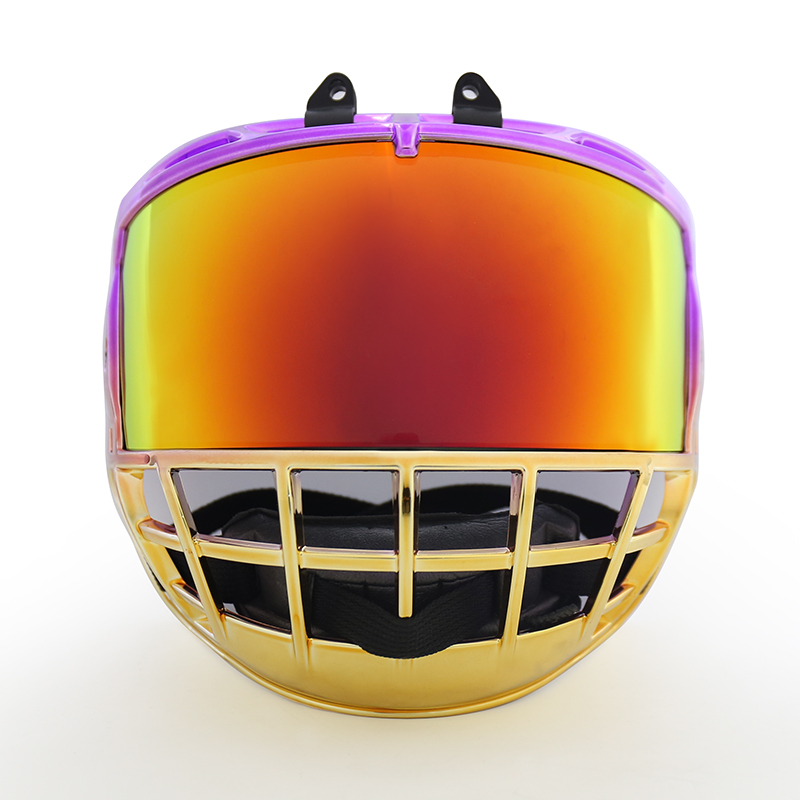
Choosing your facial protection changes how you play the game. You must weigh optical clarity against the grim reality of facial injuries.
A high-quality Anti-fog Hockey Visor completely eliminates the "jailhouse" visual interference caused by wire bars. Forwards rely heavily on this optical advantage. They need rapid puck acquisition when the puck gets lost in their feet. They also need to look through heavy screens in front of the net. A clear, unobstructed sightline enables the fast-twitch reactions required to score in tight spaces.
Clinical data paints a sobering picture of facial protection. Transitioning to a half-shield drastically increases your probability of dental reconstruction. Medical studies show a 9.9x dental injury multiplier for players wearing half-shields compared to those in full cages.
In adult recreational leagues, we must consider the "Bender" factor. The primary threat on the ice is rarely a 90mph professional slapshot. Instead, the danger comes from uncontrolled sticks swung by less-skilled opponents. You cannot rely on your reflexes to dodge an erratic stick blade in a chaotic beer league game.
Your position should influence your hardware choice.
Defensemen: They frequently block shots and engage in grueling board battles. They absorb more random impacts. Therefore, defensemen lean heavily toward the reliable safety of full cages.
Skilled Puck-Carriers: Forwards who carry the puck prefer unhindered downward sightlines. A visor allows them to stickhandle by feel and peripheral vision without dipping their heads.
Hockey equipment is expensive. You must look beyond the initial purchase price and calculate the total cost of ownership (TCO). A smart choice factors in longevity and potential medical deductibles.
Cages deliver an incredibly high return on investment. A premium titanium cage costs more upfront. However, it easily lasts up to a decade as long as it avoids rust or structural denting. It is a true "buy it for life" item.
Shields represent a recurring cost. Even a premium Anti-scratch Hockey Visor degrades over three to five years. UV exposure, micro-abrasions from ice spray, and the chemical breakdown of factory coatings eventually ruin the optical clarity. You will replace a shield multiple times over a decade.
You must weigh the price of a $70 titanium cage against standard out-of-pocket dental reconstruction. Fixing smashed teeth is often three times more expensive than treating non-dental hockey injuries. A single errant stick can cost thousands of dollars in oral surgery.
Furthermore, league compliance affects insurance payouts. Certain insurance policies, including those managed by USA Hockey, may deny dental or facial injury claims. They will reject your claim if you are not wearing a fully certified HECC cage at the time of the injury. Financial safety goes hand-in-hand with physical safety.
Hockey culture heavily influences equipment choices. You will face peer pressure, changing league mandates, and physiological challenges when altering your helmet setup.
Adult recreational leagues often harbor a toxic cultural stigma. Many veteran players view cages as "rookie gear" or signs of fear. You must confidently refute this nonsense. Look at professional female players in the PWHL. These elite athletes rationally choose full facial coverage to protect their livelihoods. Older adult players also ignore the stigma. They realize that proving toughness in a late-night beer league is not worth eating through a straw for six weeks.
Rules dictate your options across different levels of play.
Youth through NCAA: These governing bodies strictly require full cages. They prioritize absolute player safety over individual preference.
The NHL: Professional rules mandate visors for all players drafted after 2013. Older veterans can opt out through a grandfather clause.
Adult Recreational Leagues: Rules vary widely by local rinks. However, many leagues are shifting toward full-face mandates for older brackets (35+) to mitigate insurance liabilities.
Never switch from a cage to a half-shield mid-season. Transitioning introduces a severe "muscle memory deficit." Cage wearers subconsciously stop bracing for face impacts over the years. When you switch to a half-shield, your brain still thinks your jaw is protected. This false sense of security leads to dangerous positioning.
You must use practice sessions to transition safely. Re-learn your head positioning. Actively practice stick-awareness and blocking techniques before entering a competitive game.
A poorly fitted helmet compromises your safety. Proper installation and routine maintenance maximize both protection and your financial investment.
Proper fitment dictates how the hardware responds to violent impacts.
Visor Fit: The top edge must sit flush against the bottom of the helmet. However, the shield itself must sit far enough away from your cheeks to prevent lacerations upon impact. This spacing also maximizes airflow to minimize condensation.
Cage Fit: You must utilize J-clips correctly on the sides of the helmet. These clips anchor the chin cup. Failure to use them properly results in the steel mesh violently smashing into your nose upon impact.
Investing in a dual-coated Anti-fog Anti-scratch Hockey Visor yields a much better long-term TCO. Factory coatings delay the inevitable breakdown of the plastic.
Veteran equipment managers follow strict maintenance routines. They use specific non-abrasive polishes to buff out minor scratches. They strictly avoid harsh chemical cleaners, glass sprays, or heavy detergents. These harsh chemicals rapidly strip the factory anti-fog layers away. Instead, they use microfiber cloths and dedicated hockey helmet sprays to preserve the optical clarity for as long as possible.
Choosing between a cage and a half-shield is arguably the most important equipment decision you will make. It dictates your safety, your vision, and your financial exposure on the ice.
Choose a full cage, preferably titanium, if you play in unpredictable recreational leagues. It is the best choice for defensemen and anyone prioritizing financial safety over aesthetics.
Choose a half-shield only if you play in highly controlled, advanced-skill environments. You must accept the inherent medical risks and understand that sticks are generally well-managed by your peers.
Next-Step Action: Audit your current helmet today. Check for HECC expiration dates printed on the back stickers. Review your local league's insurance stipulations regarding dental coverage. Finally, assess your hardware sizing and J-clip placement before purchasing any new facial protection.
A: No. While many shields boast universal designs, brand compatibility matters. Mounting hardware varies between helmet shells. Always check the manufacturer guidelines to ensure the mounting brackets align correctly with your helmet's pre-drilled holes. Forcing a fit compromises impact resistance.
A: Factory coatings wear off quickly. You must use dedicated anti-fog sprays regularly. Avoid harsh soaps. Additionally, practice proper bench-breathing techniques. Exhale downward out of your mouth, pushing the hot air away from the polycarbonate shield to minimize condensation buildup.
A: Emphatically no. Playing without facial protection invites catastrophic risks. Historical NHL eye injury data is filled with tragic, career-ending incidents resulting from deflected pucks and careless sticks. Even highly skilled professionals suffer devastating facial trauma without adequate protection.
A: They offer a minor advantage by reducing glare in brightly lit arenas or outdoor rinks. However, many leagues explicitly ban mirrored finishes. Referees and medical staff must be able to see a player's eyes to quickly assess concussions and consciousness after a hit.


