Views: 0 Author: Site Editor Publish Time: 2026-04-23 Origin: Site
Transitioning to a visor—or upgrading an easily scratched one—drastically improves peripheral vision and airflow on the ice. However, doing so introduces specific compatibility, maintenance, and safety trade-offs. Unlike sizing skates or fitting helmets, visor selection is less about measuring tape. Instead, you must focus on understanding brand compatibility, face profiles, and coating durability. Getting this wrong can lead to dangerous gaps or ruined equipment midway through a season. Every player wants perfect optical clarity, but few know how to preserve it. This guide breaks down exactly how to choose the right shield profile for your playing style. We will show you how to ensure a secure cross-brand installation on any standard helmet. Finally, you will learn practical steps to protect the fragile factory coatings so your investment lasts multiple seasons.
Sizing is Universal, Fitting is Custom: Most visors are "one-size-fits-most" for senior helmets; compatibility is solved through polycarbonate flex and adjustable spacer kits, not distinct visor sizing.
Profile Dictates Protection: Visor shapes range from "Slim/Small" (lightweight, minimal coverage) to "Aviator" (maximum lower-face coverage), directly impacting field of view and breathability.
Safety Gaps Matter: A properly installed visor must sit two finger-widths from the nose and sit perfectly flush against the helmet's front edge to prevent stick blades from sliding underneath.
Coatings are Chemically Fragile: The lifespan of an anti-fog anti-scratch hockey visor is dictated entirely by how you clean it; generic glass cleaners will instantly strip the factory coatings.
The decision to remove a full steel or titanium cage shifts your risk profile. You trade maximum facial protection for enhanced on-ice performance. Many adult players struggle with this transition. You must weigh the immediate physical risks against the long-term performance benefits.
Visors eliminate the visual obstruction of thick metal bars. They instantly improve puck tracking around your skates. You no longer lose sight of the puck in your periphery. They also reduce overall head weight. This minimizes neck fatigue during long games. This visibility return on investment attracts many competitive players. You feel more connected to the play. Your reaction times often improve because you see plays developing sooner.
However, we must address the reality of adult amateur hockey. In casual leagues, reckless stick control happens frequently. Erratic pucks and wild sticks pose constant threats. A single high stick can cause catastrophic dental damage. These expensive dental bills easily wipe out any performance benefits. You must evaluate your league's skill level honestly. We recommend visors for highly controlled leagues. They also suit players willing to accept the inherent facial risks. If you play in a chaotic late-night league, a full cage remains the smartest financial choice.
Always ensure your gear meets regulatory safety standards. Look for HECC certification in the United States. Canadian players need CSA approval. European leagues require the CE mark. Before you buy an lce Hockey Visor, check local rulebooks. Uncertified equipment voids your insurance and gets you benched. Referees check equipment routinely. They will force you off the ice if your gear lacks proper safety stickers.
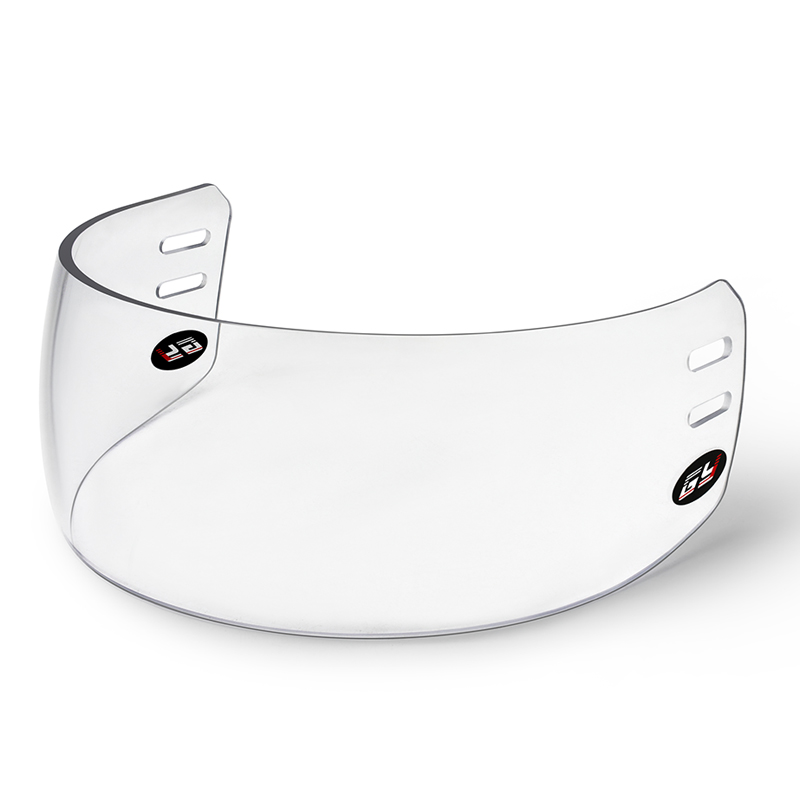
Once you commit to a half shield, you must evaluate structural profiles. Manufacturers design different shapes to solve specific on-ice problems. You must shortlist options based on your personal needs.
Straight profiles serve as the industry standard. They offer the best balance of optical clarity, airflow, and facial coverage. They suit all-around players perfectly. The bottom edge runs parallel to the ice. This design minimizes visual distortion. You get reliable protection for your eyes and upper nose.
These feature a highly compact vertical footprint. Referees and players with smaller facial structures favor them.
Pros: They offer the lightest weight possible. You gain maximum breathability because air flows freely underneath.
Cons: They leave your lower face and upper cheekbones highly exposed. A stray puck can easily strike below the plastic.
The aviator style sweeps downward in the center. It mimics the shape of aviator sunglasses.
Pros: It maximizes facial coverage. You protect more of your nose and upper mouth without reverting to a cage.
Cons: The curvature can introduce slight peripheral distortion. It also restricts downward airflow. This significantly increases your fog risk during heavy exertion.
Tinted options reduce harsh glare. They help light-sensitive players in overly bright rinks.
Implementation Risk: Many amateur and youth leagues ban them entirely. Referees need to see your eyes following an injury. Always verify your league rulebooks before purchasing.
Use this chart to quickly evaluate which shape fits your play style.
Visor Profile | Primary Benefit | Notable Drawback | Best For |
|---|---|---|---|
Straight | Balanced airflow and clarity | Standard coverage only | All-around adult players |
Small / Slim | Ultra-lightweight, max breathability | Exposes lower cheekbones | Referees, players with small faces |
Aviator / Wave | Extended facial coverage | Prone to fog, slight distortion | Players wanting max protection |
Tinted | Reduces rink glare | Often banned in amateur play | Light-sensitive players (if legal) |
Sizing a half shield differs entirely from sizing skates. You do not need precise measurements. You simply need to understand material flexibility.
Dedicated sizing rarely exists for half shields. You will not find small, medium, or large options on most retail shelves. Manufacturers mold them from flexible polycarbonate. This material bends easily. A single unit conforms to almost any standard senior helmet. They typically cover head circumferences ranging from 19 to 24.5 inches. The plastic simply bows outward or inward to match your helmet width.
Many players worry about cross-brand compatibility. You do not have to match the visor brand to your helmet brand. Mixing brands works perfectly well. You can confidently mount an Oakley shield on a Bauer shell.
Doing so requires the right hardware. You will utilize mounting standoffs, washers, and spacer kits. These pieces bridge the gap between the helmet's temple width and the shield's default curve. Without spacers, tightening the screws puts immense stress on the plastic. This stress leads to micro-cracks around the mounting holes. A universal spacer kit solves this geometry problem instantly.
You must watch out for known compatibility exceptions. Excessively wide helmet models stretch standard plastics to their absolute limit. The CCM Tacks line famously features a wider fit. These specific shells push standard visors too far. They often require specialized wide-fit versions. Alternatively, you must use custom CCM spacer components. Forcing a standard curve onto a wide shell risks catastrophic failure. The mounting points will crack upon impact.
A poorly mounted shield acts as a severe hazard. You must follow strict positioning metrics during installation. Improper angles create dangerous entry points for sticks.
Follow these steps to secure your gear correctly. Measure these gaps carefully before hitting the ice.
Top Alignment (Zero Gap): The top edge must sit completely flush against the front rim of the helmet. Never leave a gap here. An opponent's stick blade or butt-end can easily slide down the helmet. If a gap exists, the stick will slide directly into your eyes.
Facial Clearances (The 6mm/60mm Rule): Measure the internal distances. The top edge should sit at least 6mm away from your eyebrows. Additionally, the furthest front point should not extend more than 60mm past the front edge of the helmet. This geometry absorbs impacts safely.
The "Two-Finger" Golden Rule: The bottom edge should sit roughly two finger-widths away from the tip of your nose. This spacing represents the perfect middle ground.
If your shield sits too close, it traps breath. This guarantees condensation, even if you own an Anti-fog Hockey Visor. It also risks the plastic cutting your cheeks upon impact. The plastic flexes inward when hit by a puck.
If it sits too far, it creates a dangerous hazard. Sticks can easily hook up under the shield. An opponent's stick can rip your helmet backward violently. It leaves your lower eyes exposed to upward deflections. Stick to the two-finger gap for optimal safety.
Buying the equipment represents only the first step. You must actively maintain it. The reality of factory coatings catches many players off guard. Purchasing a premium Anti-fog Anti-scratch Hockey Visor provides excellent protective films. However, these chemical layers remain highly vulnerable to degradation. You must treat them delicately.
Never use standard household glass cleaners. Do not use furniture polish or dish soap. These harsh chemicals immediately strip the factory coatings. Surfactants in dish soap destroy the hydrophobic layer. Once stripped, your expensive gear becomes useless. It will fog up constantly.
Instead, follow a strict maintenance protocol. Only use warm water and clean microfiber cloths. Use manufacturer-approved AFR (Anti-Fog/Reflective) sprays. Apply the spray sparingly. Buff it out gently in circular motions.
Pro Tip: Learn to actively exhale "downward" through your mouth. This physical technique keeps warm moisture off the lens. Do this especially while you rest on the bench. Controlling your breath prevents more fog than any chemical spray.
Even the best Anti-scratch Hockey Visor will get ruined inside a messy gear bag. The highest total cost of ownership driver is bag-friction. On-ice impacts rarely ruin the optics. Loose tape rolls, stray pucks, and skate blades scratch plastics easily. Micro-abrasions scatter rink light, causing severe glare.
Always wrap your helmet in a dedicated fleece-lined bag. An old, soft t-shirt works just as well. Do this before throwing it into your hockey bag. This simple habit doubles the lifespan of your equipment. It prevents the daily friction that destroys optical clarity.
Do not ignore your mounting hardware. Screws back out over time. Constant rink vibrations loosen the threads. Check and hand-tighten your temple screws every three to four weeks. Never overtighten them, or you will crack the polycarbonate. Just ensure they sit snug. This simple habit prevents mid-game equipment failure.
Selecting a half shield comes down to choosing the right profile. It must fit your personal risk tolerance. You also must ensure the installation eliminates dangerous gaps. Ignoring maintenance will ruin your investment within weeks. Protecting the factory coatings ensures perfect vision all season long.
Here are your action-oriented next steps:
Identify your specific helmet size and width to gauge spacer needs.
Select between a Straight or Aviator profile based on your lower-face coverage preferences.
Purchase a dedicated microfiber helmet bag to prevent scratches during transit.
Buy a universal spacer kit alongside your new gear to ensure a flush, stress-free fit.
A: No. Most visors are universally compatible. You do not need to match brands. You may simply need a universal spacer kit to align the screws properly and bridge any gaps.
A: Typically, it lasts 1 to 3 seasons. The lifespan is largely dictated by how strictly you protect it from scratches inside your equipment bag and avoid harsh cleaning chemicals.
A: If the factory coating is intact, the visor may be mounted too close to your face, restricting airflow. Ensure the "two-finger" gap from your nose, or try adjusting your breathing technique on the bench.
A: No. Visors are designed strictly for Senior/Adult certified helmets. Youth and junior players are universally required by rulebooks to wear full facial protection, such as steel or titanium cages.


