Views: 0 Author: Site Editor Publish Time: 2026-05-04 Origin: Site
Every amateur and semi-pro hockey player eventually faces a critical gear dilemma. You must constantly balance on-ice visibility against severe dental and facial injury risks. A half lce Hockey Visor offers peak peripheral vision and a sleek, professional aesthetic. However, it completely exposes your lower face to unpredictable puck deflections and errant high sticks. Pucks bounce unpredictably off goalposts and sticks. A routine play can quickly turn into a costly medical emergency.
Deciding between a full shield, cage, or half visor requires more than just picking what looks cool in the locker room. We will break down this decision using an evidence-based comparison. You will learn how to evaluate performance tradeoffs and implementation realities. This guide helps you make a definitive, stage-appropriate decision for your facial protection. You will walk away knowing exactly which setup matches your skill level, budget, and risk tolerance.
The "Beer League Axiom": If you pay to play (sign the front of the check), full protection is the financially responsible choice; if you are paid to play, visors are standard.
Half visors carry a 9.9x higher risk of dental injuries compared to full cages, with dental repair costs averaging 3x more than standard hockey injuries.
An ice hockey visor generally has a 5-year maximum lifespan due to plastic degradation, whereas a well-maintained titanium cage can last 10+ years.
Full transparent shields (fishbowls) offer excellent vision and protection but introduce severe ventilation and fogging bottlenecks.
Hockey players today have four primary facial protection options. Each design uses specific materials to balance safety and performance. Understanding these core designs helps you identify the right tool for your specific game.
Manufacturers build traditional cages from durable steel or ultra-light titanium. This classic design offers maximum ventilation and unbeatable impact defense. It completely surrounds the face, eliminating the risk of large objects reaching your eyes or teeth. Many players worry about visual obstruction. However, modern flat-bar titanium designs significantly reduce this issue. The flattened metal bars sit closer to your face and align better with your natural sightlines. Titanium also refuses to rust, making it a highly durable investment.
A standard half visor consists of high-impact polycarbonate. It defends your eyes and upper face against direct impacts. This setup maximizes your peripheral vision and allows unrestricted airflow to your nose and mouth. Professionals strongly prefer this option for its clarity. The open bottom design allows unrestricted breathing during intense shifts. However, it leaves your jaw and teeth entirely unprotected.
The full shield operates as a fully transparent high-impact polycarbonate dome. It covers your entire face from forehead to chin. You get a panoramic field of view combined with full physical coverage. Pucks and sticks cannot penetrate the barrier. The major drawback involves strict moisture management. The enclosed plastic dome traps body heat rapidly. You must actively manage fog and sweat buildup during every single game.
Hybrid designs combine a clear visor top with a metal cage bottom. They attempt to offer the best of both worlds. You get clear eye-level vision and solid jaw protection. However, you should approach hybrids with skepticism. They lack lightweight material options like titanium. Manufacturers typically use thicker plastics and heavier steel grids to join the two halves. Consequently, these become the heaviest and least cost-effective choices on the market.
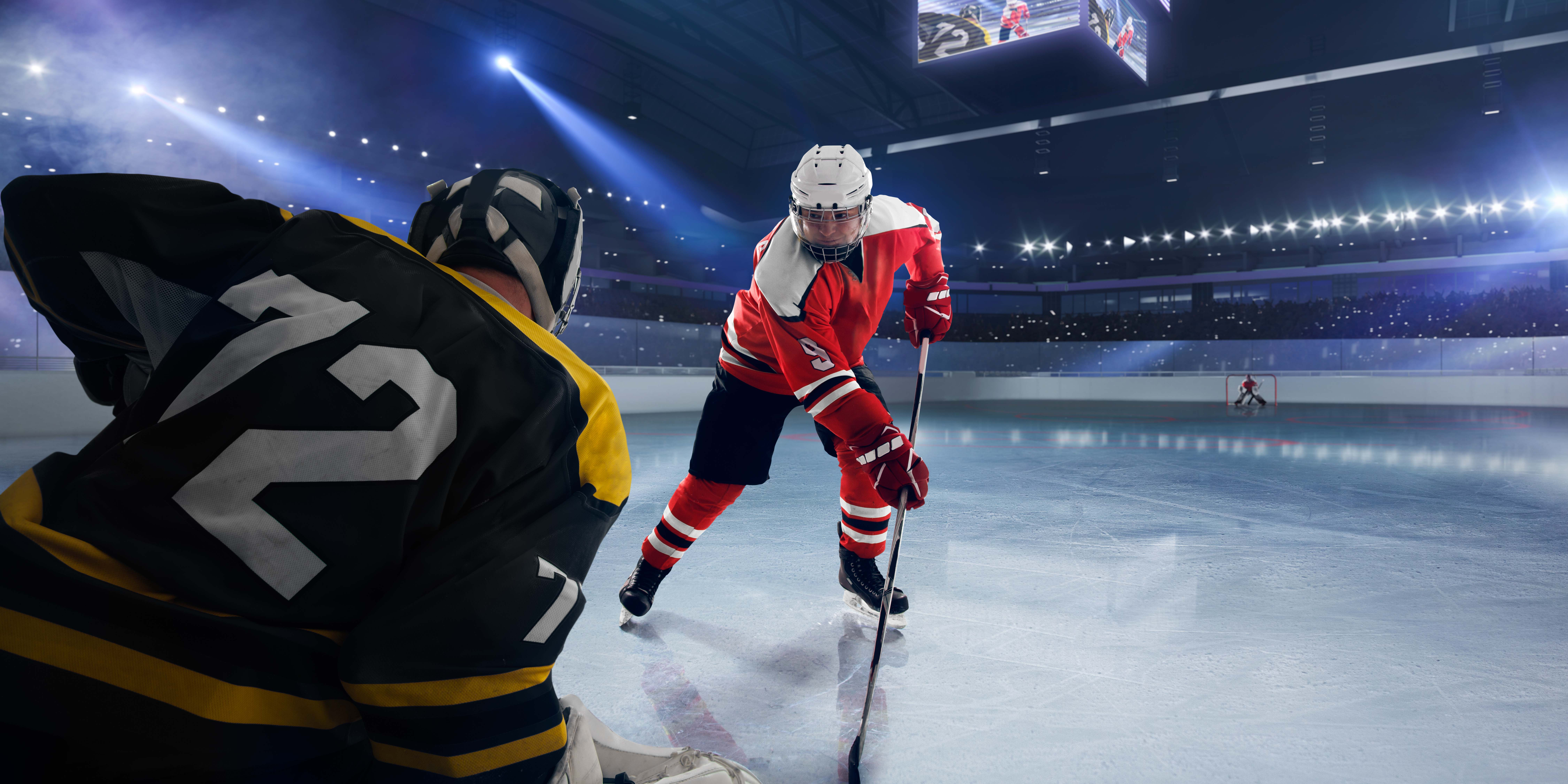
Choosing the right face protection requires analyzing four specific performance dimensions. No single piece of equipment scores perfectly across all categories. You must decide which tradeoffs align best with your playing style.
Dimension | Traditional Cage | Half Visor | Full Shield | Hybrid Mask |
|---|---|---|---|---|
Visibility | Good (Bars obstruct slightly) | Excellent (Unmatched clarity) | Very Good (Panoramic view) | Good (Distortion at seams) |
Ventilation | Excellent (Maximum airflow) | Very Good (Open bottom) | Poor (Traps heat heavily) | Moderate (Restricted top) |
Protection | Excellent (Full face coverage) | Poor (Lower face exposed) | Excellent (Full face coverage) | Excellent (Full face coverage) |
Weight | Very Good (If titanium) | Excellent (Lightest option) | Good (Polycarbonate adds weight) | Poor (Heaviest combination) |
Visors provide unmatched optical clarity. They allow you to read the play without any grid lines crossing your focal point. Full shields offer similar panoramic views but can distort vision when you look down at the puck. Interestingly, players often overstate the visual drawbacks of a cage. Neurological reality plays a huge role here. The human brain naturally "filters out" the cage bars once gameplay begins. Your eyes focus on objects at a distance, rendering the bars essentially invisible during active play.
Cages win the ventilation battle by default. Air flows freely through the metal grid, cooling your face instantly. Visors also perform well since the lower half of your face remains open to the cold rink air. Full shields struggle terribly in this dimension. They trap radiant body heat, leading to rapid fatigue. You will experience heavy perspiration around your face and eyes. This trapped heat often drips directly onto the inside of the plastic lens.
Medical data paints a clear picture regarding protection. Half visors expose players to sticks and pucks that frequently ride up under the plastic edge. Half visors carry a 9.9x higher risk of dental injuries compared to full face protection. We can look at historical NHL injuries to validate these risks. Players like Carl Hagelin suffered career-ending eye injuries when sticks slipped under their visors. A cage or full shield prevents these catastrophic, lower-face, and under-visor impacts entirely.
Historically, plastic visors held a massive weight advantage over heavy steel cages. This gap has closed significantly. Modern titanium cages now rival the lightness of bare visors. Upgrading to a titanium cage neutralizes the historical weight penalty. Your neck experiences less fatigue over a long season. Hybrids and full shields now rank as the heaviest options due to their thick polycarbonate materials.
Plastics demand dedicated maintenance. If you choose a visor or full shield, you must understand how polycarbonate behaves in cold, wet environments. Ignoring maintenance leads to dangerous visual impairments on the ice.
High-impact polycarbonate naturally degrades over time. Exposure to arena lighting, sweat acidity, and physical impacts breaks down the molecular structure. The plastic will eventually crack, yellow, and haze. You should frame the maximum viable lifespan of a visor at roughly 5 years. After this period, micro-fractures weaken the impact resistance. A five-year-old visor poses a safety risk even if it looks relatively clear.
Every time you wipe away sweat, you risk scratching the plastic. Discussing the necessity of an Anti-scratch Hockey Visor is vital. You must clarify that "anti-scratch" means scratch-resistant, not scratch-proof. Factory coatings harden the outer layer, but rough materials will still cause damage. Improper cleaning ruins the coating quickly. Wiping your face shield with a dirty, abrasive hockey jersey guarantees permanent micro-abrasions. Always use a clean microfiber cloth.
Condensation physics dominate the cold ice environment. Your face radiates hot, moist air. When this air hits the freezing polycarbonate, it immediately condenses into fog. Evaluating the baseline requirement of an Anti-fog Hockey Visor is critical. Factory anti-fog treatments change the surface tension of the plastic, preventing water droplets from forming. Some players rely on post-market sprays. Others use the old pro-hack of applying Pledge furniture polish. While Pledge works temporarily, it leaves a greasy residue and degrades the plastic over time.
You cannot cut corners on facial protection. For players committed to half-shields, buying an integrated Anti-fog Anti-scratch Hockey Visor upfront yields a much better return on investment. Cheaper, untreated plastics force you to constantly buy replacement lenses and expensive spray bottles. Investing in premium factory coatings saves money and preserves your vision during crucial game moments.
Buying the right equipment solves only half the problem. Improper installation compromises safety entirely. A loose cage or a misaligned visor leaves dangerous gaps for sticks to enter.
A proper visor fit requires specific mounting geometry. You cannot simply screw it onto the helmet indiscriminately.
The top edge of the visor must sit flush with the helmet brim.
You must leave about 1 inch of space extending from your forehead to the inside of the plastic. This gap creates a "chimney effect," allowing hot air to escape upward.
The bottom edge must sit perfectly level with the tip of your nose. If it sits higher, your eyes remain exposed to upward deflections.
Cages require precise mechanical integration with your helmet. You must detail the necessity of "J-clips" mounted on the side of the helmet at the temples. The cage must physically lock into these clips when pulled down. These clips absorb and distribute severe puck impacts into the helmet shell. If you remove the J-clips, a heavy shot will drive the metal cage directly into your chin and jaw, causing the exact injuries the cage was designed to prevent.
Helmet sizing and face protection sizing do not always match perfectly. Note that while visors are typically "one size fits all," cages are precisely sized. Cages often require buying one size smaller than the helmet. For example, a large helmet often pairs best with a medium cage. This sizing nuance ensures an optimal chin-cup fit. The cup must sit snugly against the bottom of your chin, not floating loosely below it.
Your choice of facial protection dictates your safety, visibility, and long-term financial risk on the ice. Let us summarize the persona-driven recommendations.
Grinders, defensemen, and amateur players: You should default to a titanium cage or a full shield. The fiscal and physical safety benefits far outweigh the minor visual adjustments. You avoid catastrophic dental bills.
Elite puck-moving forwards in compliant leagues: If you accept the risks and your league permits it, select a premium, factory-coated visor. Ensure you maintain it properly to preserve optical clarity.
Next-Step Action: Promptly check your current helmet compatibility. Verify the brand and sizing rules for face attachments. Finally, double-check your specific league’s insurance policies and equipment mandates before making your purchase.
A: No. Abrasive buffing destroys the factory anti-fog and anti-scratch coatings completely. Polishing compounds will strip away these chemical layers, leaving the plastic cloudy and highly susceptible to severe condensation. Once a visor sustains deep scratches in your line of sight, you must replace the entire unit for safety.
A: Only when recovering from a specific facial or dental injury. The league mandates visors for all incoming players primarily for visibility and marketability. Fans want to see the players' faces. Once a player heals from a broken jaw or orbital bone, league rules require them to return to a standard half visor.
A: Full shields trap radiant facial heat due to a lack of airflow. Over time, the factory anti-fog layer degrades from sweat and wiping. To fix this bottleneck, we recommend applying a specialized hockey anti-fog spray before every game. Alternatively, you can use the baby shampoo hack: apply a thin layer, let it dry, and gently buff it clear.


